Posts

Ihsan Community Center Design and Renovation

Grant. Ihsan Community Center Design. Sponsored studio. $5,000. PI: Tang

The “Ihsan Community Center Design and Renovation” is a sponsored studio by Ihsan community. The studio explored design possibilities and engaged the Ihsan community in developing future visions. The redesign and renovation of the current Ihsan community center emphasized logical architectural space, including prayer area, classrooms for educational programs, multi-purpose hall, and outdoor recreation. The project was developed by optimizing the current structure, space reorganization, and looking to build a vision for the land and building that will bring a sense of pride to the Islamic architecture and will encourage participation from youth and adults alike.

DAAP team: Kristian Van Wiel, Maddie Cooke, Nick Chism, Seanna LaGanke, Ummul Buhari-Mohammed, Amy Cui. Faculty: Ming Tang. Advisors: Xiangbin Xu, Yongquan Chen

UC DAAP students presented their design to the Ihsan Community members. Photograph by Xiangbin Xu


Community engagement.

presentation at the Ihsan community.

The proposed design was modeled in Autodesk BIM 360 + Revit, and evaluated through the immsersive VR with Occulus Quest.


Thanks to all the supports from the Ihsan Community, the School of Architecture and Interior Design, and Autodesk. Thanks to the field trip with the Islamic Center of Greater Cincinnati (ICGC), Clifton Mosque, and Islamic Center of Mason.

For more information on this project, please contact Ihsan Community or Prof. Ming Tang at UC DAAP.

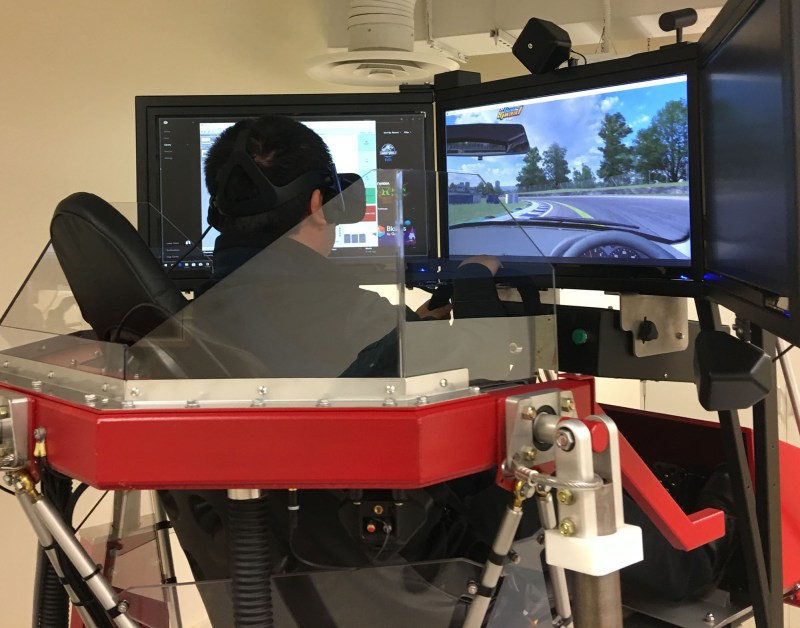
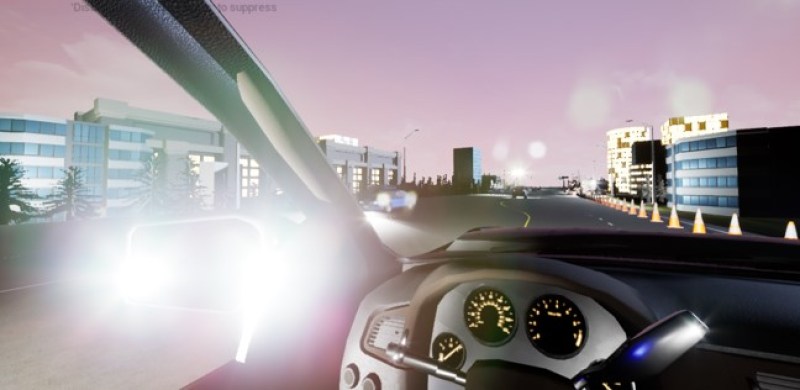
Digital Twin of Ohio Highway. Training Simulation for snowplow

Ming Tang led the team that constructed six large-scale Ohio highway digital twins for snowplow drivers. The road models, which are 70 miles long and span three Ohio counties, were based on real-site GIS and TOPO data.

“Evaluate Opportunities to Provide Training Simulation for ODOT Snow and Ice Drivers”. Phase 2. Ohio Department of Transportation. PI: John Ash. Co-PI: Ming Tang, Frank Zhou, Mehdi Norouzi, $952,938. Grant #: 1014440. ODOT 32391 / FHWA Period: 01.2019-03.2022.

“Evaluate Opportunities to Provide Training Simulation for ODOT Snow and Ice Drivers”. Phase-1. Ohio Department of Transportation. PI: Jiaqi Ma. Co-PI: Ming Tang, Julian Wang. $39,249. ODOT 32391 / FHWA. Period: 01.2018- 01.2019.


Lorain County. District 3. 

Hoicking Mountain District 10.

City of Columbus-south A


City of Columbus-West B

City of Columbus-North. C


Publications

Raman, M., Tang, M3D Visualization Development of Urban Environments for Simulated Driving Training and VR Development in Transportation Systems. ASCE ICTD 2023 Conference. Austin. TX. 06. 2023

Collaborative teaching to study the social impact of A.I, Automation, and Robots

Funded by UC Forward Course Development grant. The Future of (no) Work and Artificial Intelligence.

(Award fund rescind due to COV-19 budget freeze). 2020

Amount: $15,000.  The courses will be offered in the Fall semester. 2020.

  • Ming Tang, Associate Professor, School of Architecture and Interior Design, DAAP
  • Cory Haberman, Assistant Professor and Director of the Institute of Crime Science, CECH
  • Tamara Lorenz, Assistant Professor, Psychology-Mechanical Engineering-Electrical Engineering (jointly appointed). Department of Psychology. College of A&S.

Self-portrait drawing. designed by Google Machine Learning named “DeepDream”. Painted by Kuka Robot. By Ming Tang. 2018

Read more

An interdisciplinary approach to using eye-tracking technology for design and behavioral analysis

Eye-tracking Tobii workshop offered at CGC, DAAP, UC. 2019.

Eye-tracking devices measure eye position and eye movement, allowing documentation of how environmental elements draw the attention of viewers. In recent years, there have been a number of significant breakthroughs in eye-tracking technology, with a focus on new hardware and software applications. Wearable eye-tracking glasses together with advances in video capture and virtual reality (VR) provide advanced tracking capability at greatly reduced prices.  Given these advances, eye trackers are becoming important research tools in the fields of visual systems, design, psychology, wayfinding, cognitive science, and marketing, among others. Currently, eye-tracking technologies are not readily available at UC, perhaps because of a lack of familiarity with this new technology and how can be used for teaching and research, or the perception of a steep learning curve for its application.

It has become clear to our UC faculty team that research and teaching will significantly benefit from utilizing these cutting-edge tools. It is also clear that a collective approach to acquiring the eye-tracking hardware and software, and training faculty on its application will ultimately result in greater faculty collaboration with its consequent benefits of interdisciplinary research and teaching.

The primary goals of the proposed project are to provide new tools for research and teaching that benefit from cutting-edge eye-tracking technologies involving interdisciplinary groups of UC faculty and students. The project will enhance the knowledge base among faculty and allow new perspectives on how to integrate eye-tracking technology. It will promote interdisciplinarity the broader UC communities.

Grant:

  • “Eye-tracking technology”. Provost Group / Interdisciplinary Award. $19,940. PI: Tang. Co-PI: Auffrey, Hildebrandt. UC. Faculty team: Adam Kiefer,  Michael A. Riley, Julian Wang, Jiaqi Ma, Juan Antonio Islas Munoz, Joori Suh. 2018
  • DAAP matching garnt  $ 11,000.

Hardware: Tobii Pro Glasses, Tobii Pro VR

Software: Tobii Pro Lab, Tobii VR analysis

Test with Tobii Pro Glasses

urban mobility studio

Grant: “Project-Based Collaborative Coursework for Developing Connected Transportation Network and Accessible Multimodal Hub in Uptown”. UC Forward grant. Co-PI: Heng Wei, Na Chen, Xinhao Wang, Jiaqi Ma, Ming Tang. $5,000. Total $27,500.

ARCH4001. Fall. 2018. SAID, DAAP, UC.

Faculty: Ming Tang, RA, LEED AP, Associate Professor. UC

Using Cincinnati Uptown and proposed Smart Corridor area as the focus area, the studio presents a study investigating the urban mobility with an emphasis on the simulated human behavior cues and movement information as input parameters. The research is defined as a hybrid method which seeks logical architecture/urban forms and analyzes its’ performance. As one of the seven-courses-clusters supported by UC Forward, the studio project extends urban mobility study by exploring, collecting, analyzing, and visualizing geospatial information and physically representing the information through various computational technologies.
The studio investigation is intended to realize the potential of quantifying demographic, social, and behavior data into a parametric equation. In the experiments, the integration of non-geometrical parameters within the form seeking and performance evaluation process resulted in a series of a conceptual model to represent the movement and access. The projects will be developed by optimizing transportation network, analyzing way-finding and human behavior. Ultimately, the studio looks to build upon the strengths pre-defined in the evaluation method and capture the benefits of Geographic Information System (GIS), virtual reality (VR), eye-tracking, and wayfinding simulation by seamlessly integrating vital geospatial components in the equation and altering the way people explore the possible design solutions in order to generate the ideal urban and building forms.

Students: Nolan Dalman, Sam DeZarn, Nicole Powers, Jake Miller, Hang Phan, Josh Funderburk, Rugui Xie, Nick Mann, Azrien Isaac, Shiyuan li, Spencer Kuehl, Randall Morgan, Greg Ginley, Umme Habiba


UC Forward Collaborative on Smart Transportation Forum at Niehoff studio

Fall 2018 Urban Mobility studio presented at the Uptown Innovation Transportation Corridor Forum 04.31.2019, featured by UC News. UC students present future of transportation at forum. 2019

More info on the studio and the student projects.