Posts

paper in Computers, Environment and Urban Systems

Osoro, Ogutu B., Jingjing Li, Ming Tang, Xi Chen, Kelly Merrill, Lauren Forbes, Briana L. Simms, Paris Wheeler, Clementine Adeyemi, and Diego F. Cuadros. “Family Specific Spatial Borrowing in Multimodal Urban Reconstruction: A Leave-One-Neighborhood-Out Study of Cincinnati.” Computers, Environment and Urban Systems 132 (2027): 102541. https://doi.org/10.1016/j.compenvurbsys.2026.102541.

Family Specific Spatial Borrowing in Multimodal Urban Reconstruction: A Leave-One-Neighborhood-Out Study of Cincinnati.

Urban spatial models often assume that nearby borrowing improves prediction across target variables, but this assumption is rarely tested across distinct urban feature families within a city. We evaluate this question on a citywide hexagonal grid of Cincinnati, Ohio (2016 cells, 60 features in 14 feature families) using multimodal masked reconstruction. We compare four models spanning linear, local nonlinear, shared-gate graph, and selective-gate graph architectures under full leave-one-neighborhood-out evaluation across 50 neighborhoods, with primary summaries for the 36 neighborhoods having at least 20 cells. Median held-out-neighborhood R2 is the primary comparison metric. Cross-neighborhood transfer is family-specific, and no single borrowing strategy dominates. Ridge performs best for street structure, indicating that some spatially regular families are best reconstructed from local linear combinations. The local nonlinear masked autoencoder (MLP-MAE) holds the highest median for most families with positive transfer, though these differences are not statistically distinguishable from the graph models, indicating that local nonlinear multimodal fusion is often sufficient. Graph-based models help most clearly for topography, while the selective-gate graph model wins many individual neighborhood comparisons for several families despite lower medians, reflecting different error profiles. Graph models also produce more neighborhood-structured representations: contextual embeddings from the selective multimodal spatial autoencoder (SMSA) recover neighborhood structure better than raw principal components or local-only embeddings. Learned gates are stable across folds and provide interpretable diagnostics of context reliance, but not a universal ranking of borrowing regimes. These results show that the appropriate spatial borrowing strategy is target-specific rather than universal. For neighborhood-scale interpolation, imputation, and urban monitoring, one spatial modeling recipe can systematically misrepresent some feature families even within the same city.

Read more

Fluid Sim in VR

Fluid Simulation in Virtual Reality. Unreal Engine. Collision test with hand. 

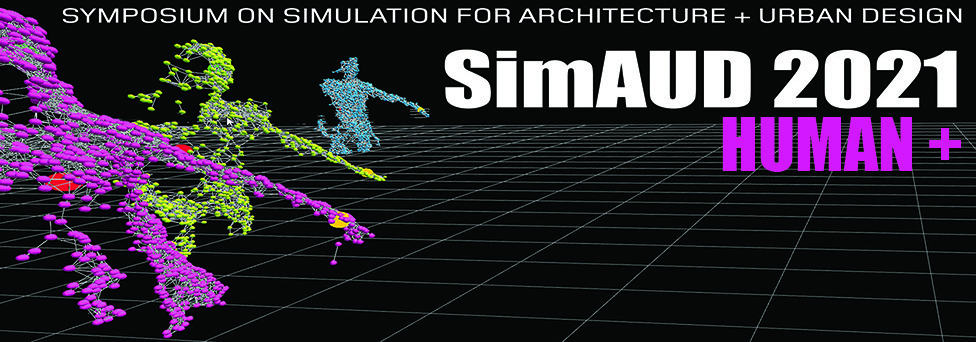
paper at SIMAUD 2021

Ming Tang, Mark Landis’ paper titled “Fixed shading device design with the performance-based-design and energy simulation” is accepted at The 12th annual Symposium on Simulation for Architecture and Urban Design (SimAUD). 2021

This paper presents a performance-driven design (PBD) tool developed by combining the energy analysis abilities of Ladybug, Honeybee, and EnergyPlus to inform shading device design decisions. Consider architects as the user group, the PBD workflow presented in this paper demonstrates the optimization of fixed shading devices for cooling and heating loads while providing multiple aesthetic options by not limiting the shading device typology at the beginning of the process. The PBD produces iterations that perform similarly, yet effectively, in terms of energy savings so that a designer can design shading devices based on other criteria such as aesthetic concerns or constructability issues. With a customized user interface (UI) for PBD, designers can move between different shading typologies and add their own creative, artistic interpretations while not being required to run complex simulations after each design change. This paper presents how this PBD process with new UI (PBD-UI)  can be agile enough to handle frequent design changes. This method was tested by a group of architectural design students and demonstrated that the PBD-UI is more in-line with the parametric design process than traditional shading device design methods. Combined with parametric design tools and customized UI, it can facilitate more creative, innovative design solutions based on performance criteria such as reducing heating and cooling loads.

The source code and tutorial of the tool are available here.

3D print for cast-in-place concrete

Cast-in-place Freeform Concrete with Big Area AdditiveManufacturing Formwork

Ming Tang, Noah Shroyer. Cast-in-place Freeform Concrete with Big Area AdditiveManufacturing Formwork. International Journal of Architecture, Engineering and ConstructionVol 10, No 2, Vol 10, No 2 (2021) 1-9

Abstract: Parametric design and digital fabrication give precise control in the design and materialization of complex geometric forms. Large-scale additive manufacturing machines can fabricate digitally generated architectural forms quickly and economically at full scale. However, their application in building construction has been limited. Through a case study, this paper examines integrating parametric design with material and constructed reality through 3D printed formwork for cast-in-place concrete. The following details are presented: (1) creating a parametric model capable of designing, testing, and manipulating the customized freeform in response to construction and material constraints, (2) fabrication method of big area additive manufacturing of formwork with carbon fiber-reinforced acrylonitrile butadiene styrene plastic, and (3) construction process (studying material behavior, testing the formwork, and the final onsite concrete cast)

This project was supported by the computation team led by Ming Tang, the design team led by Jose Garcia Design, the structural engineering team led by Pinnacle EngineeringInc, formwork and fabrication led by Cincinnati Incorporated. The project was constructed by the general contractor Jose Garcia Construction. The rebar shop fabrication was provided by Artistic Ironworks.

Video from Cincinnati Incorporated

Changbai Mountain Forest and Hot Spring Resort

Changbai Mountain Forest and Hot Spring Resort

长白山森林温泉度假酒店

Changbaishan. China.

Consultant work for BLVD Architects,

Status:: completed.

Ming Tang worked with BLVD architect develop a parametric roof model for construction. The 3D roof structure was constructed as an information model containing a large number of parameters that were manipulated in various design phases.  The construction is completed in 2022. 


more information on the project is available at the BLDV project gallery.