ASCE presentation

Adebisi, A., Ash, J., Tang, M.  Poster presentation. Evaluating the Performance of Safety Vests for Identifying Road Workers at Work Zones. 2022 ASCE International Conference on Transportation & Development (ICTD 2022)  American Society of Civil Engineers. ASCE. Seattle, WA. 05. 2022

Team: John Ash, Ming Tang, Adekunle Adebisi, Julian Wang, Jiaqi Ma. 

Funded by the Ohio Department of Transportation (ODOT)


More information on this project can be found at IRis Ignite conference,  Access Vest or ODOT research database


IRiS Ignite talk

Ming Tang presented the recent research project at the annual conference hosted by the Institute for Research in Sensing (IRiS), May 25th and 26th, 2022 at UC. This event re-imagines the traditional academic conference to forge novel connections and stimulate new interdisciplinary conversations on the broad topic of sensing, including work on perception, sensor technology development, and ethical innovations in sensing research. 

Project:  Use eye-tracking to measure the effectiveness of safety vests

Team: Ming Tang, John Ash, Adekunle Adebisi, Julian Wang, Jiaqi Ma. 

Funded by the Ohio Department of Transportation (ODOT)

Work zones are an essential component of any state transportation agency’s construction and maintenance operations. As such, agencies apply numerous practices to keep their workers safe during construction operations. The Ohio Department of Transportation (ODOT) recently invested in several more advanced items to improve worker safety (and traveler safety, by hopefully reducing the number of crashes overall). Specifically, ODOT invested in Type 2 and 3 safety vests, halo lights, and reflectors on the back of dump trucks. In 2020, a team of researchers from the University of Cincinnati (UC) worked with the Ohio Department of Transportation to assess the effectiveness of safety vests for day and night use.

The simulation-based evaluation used measurements to create realistic retroreflective vests, lights, and other safety equipment in virtual scenarios. These items were then placed in different virtual work zone environments, each of which had different work zone setup conditions, traffic control, vests worn by workers, time of day/ambient lighting, etc. Through an eye-tracking experiment measuring participants’ gaze on workers in different virtual work zone scenarios and a driving simulator experiment in which participants drove through virtual work zones and were asked follow-up questions on worker conspicuity, subjective and objective measures of worker visibility were obtained.


More information on this project can be found at  Access Vest or ODOT research database

seminar: Design in the Age of Metaverse and Extended Reality

ARCH 7036-004 / ARCH5051.Elective Arch Theory Seminar.  Spring semester. DAAP, UC.
Design in the Age of Metaverse and Extended Reality

Instructor: Ming Tang.  Director, Extended Reality Lab. XR-Lab, Associate Professor, SAID, DAAP, University of Cincinnati


This seminar course focuses on the intersection of architecture design, and interior design with immersive visualization technologies, including Virtual Reality, Augmented Reality, Digital Twin, social VR, and real-time simulation. The class will explore the new spatial experience in the virtual realm and analyze human perceptions through hand-tracking, body-tracking, haptic simulation, and various sensory inputs. Students will learn both the theoretical framework and hands-on skills on XR development. The course will provide students exposure to the Oculus Quest, Teslasuit, Hololens technologies, and wearable sensors. Students are encouraged to propose their own or group research on the subject of future design with XR.

Hardware: Oculus Quest, and Hololens were provided by the course.

Student Research Project

Digital Twin

AR for community engagement. Price Hill


References:

Recommended podcast on Metaverse


Book Chapter

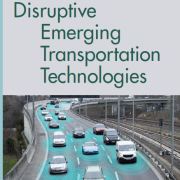
Ming Tang wrote a section titled “Design and Development for Virtual Reality-based Driving Simulation” for Chapter 1 of the book Disruptive Emerging Transportation Technologies. Edited by Heng Wei, Yinhai Wang, and Jianming Ma. Published by American Society of Civil Engineers (ASCE).  2022

Disruptive Emerging Transportation Technologies provides forward-looking overview of the relevant 4IR technologies and their potential impacts on the future disruptive emerging transportation. It is a valuable reference for relevant educators to re-imagine their roles, redesign their curricula, and adopt very different pedagogical strategies to address this inevitability, particularly when they are introducing emerging technologies into transportation planning and development, infrastructure design, and traffic management.

Topics include

4IR technologies impacting the future of transportation such as artificial intelligence, machine learning, edge computing, fog computing, cloud computing, fifth generation innovative communications technology, virtual reality, and the Internet of Things (IoT);
Surface transportation automation including connected vehicle (CV) and autonomous vehicle (AV) technologies, as well as other automation-based vehicles;
Testing methods and technologies for autonomous vehicles;
Emerging mobility services such as automated delivery and logistics, mobility as a service (MaaS), and mobility on demand (MOD);
Shared sustainable mobility such as shared bicycle services, shared vehicle services, and first mile/last mile solutions;
Cooperative and automated traffic control including self-organized intelligent adaptive control, eco-control and eco-ramp metering, and integrated ramp and corridor control; and
Major unmanned aerial vehicle (UAV) technologies and their possible impacts on the future of transportation.

NSF: Future of Work

Ming Tang worked as a co-investigator on the project funded by the NSF Grant. 

Future of Work: Understanding the interrelationships between humans and technology to improve the quality of work-life in smart buildings.

Grant: #SES-2026594 PI:  David W. Wendell. co-PIs: Harfmann, Anton; Fry, Michael; Rebola, Claudia; co-Is: Pravin Bhiwapurkar, Ann Black, Annulla Linders, Tamara Lorenz, Nabil Nassif, John Seibert, Ming Tang, Nicholas Williams, and Danny T.Y. Wu.  01-01-2021 -12-31-2021 National Science Foundation $149,720. Awarded Level: Federal 


The primary goal of this proposed planning project is to assemble a diverse, multidisciplinary team of experts dedicated to devising a robust methodology for the collection, analysis, and correlation of existing discipline-specific studies and data. This endeavor focuses on buildings and their occupants, aiming to unearth previously undiscovered interactions. Our research will specifically delve into the intricate interrelationships between four key areas: 1) the overall performance of buildings, 2) the indoor and outdoor environmental conditions, 3) the physical health of the occupants, and 4) their satisfaction with the work environment. This comprehensive approach is designed to provide a holistic understanding of the dynamic between buildings and the well-being of the individuals within them.


Prof. Anton Harfmann developed the sensor towers.


Ming Tang spearheaded the development of a Digital Twin model, an innovative project integrating multiple historical sensor data sets into a comprehensive, interactive 3D model. This model encompasses several vital features: the capture, analysis, and visualization of historical data; cloud-based data distribution; seamless integration with Building Information Models (BIM); and an intuitive Web User Experience (UX). Building elements are extracted as metadata from the BIM model and then overlaid in screen-based and Virtual Reality (VR) interfaces, offering a multi-dimensional data view. Further details are available at the Cloud-based Digital Twin project for a more in-depth exploration of this work.


See more details on the Digital Twin workflow.